
Kakapo have delivered their biggest breeding season on record, with 90 chicks born in New Zealand in 2026 lifting the flightless parrot's population to 325. Conservationists confirmed the new total in September after the youngest bird reached 150 days old, the point at which chicks are considered independent, marking a major gain for a species still classed as critically endangered.
The world's heaviest parrot has now passed 300 birds for what may be the first time in 75 years. The increase follows a four-year pause between breeding seasons and decades of work by named conservation leaders including Deidre Vercoe and Tane Davis, whose teams combine protected offshore habitat, radio tracking, remote nest monitoring and targeted care.
Ninety new birds. In the early years of the recovery effort, producing the same number took 16 years.
A Record Written in Feathers
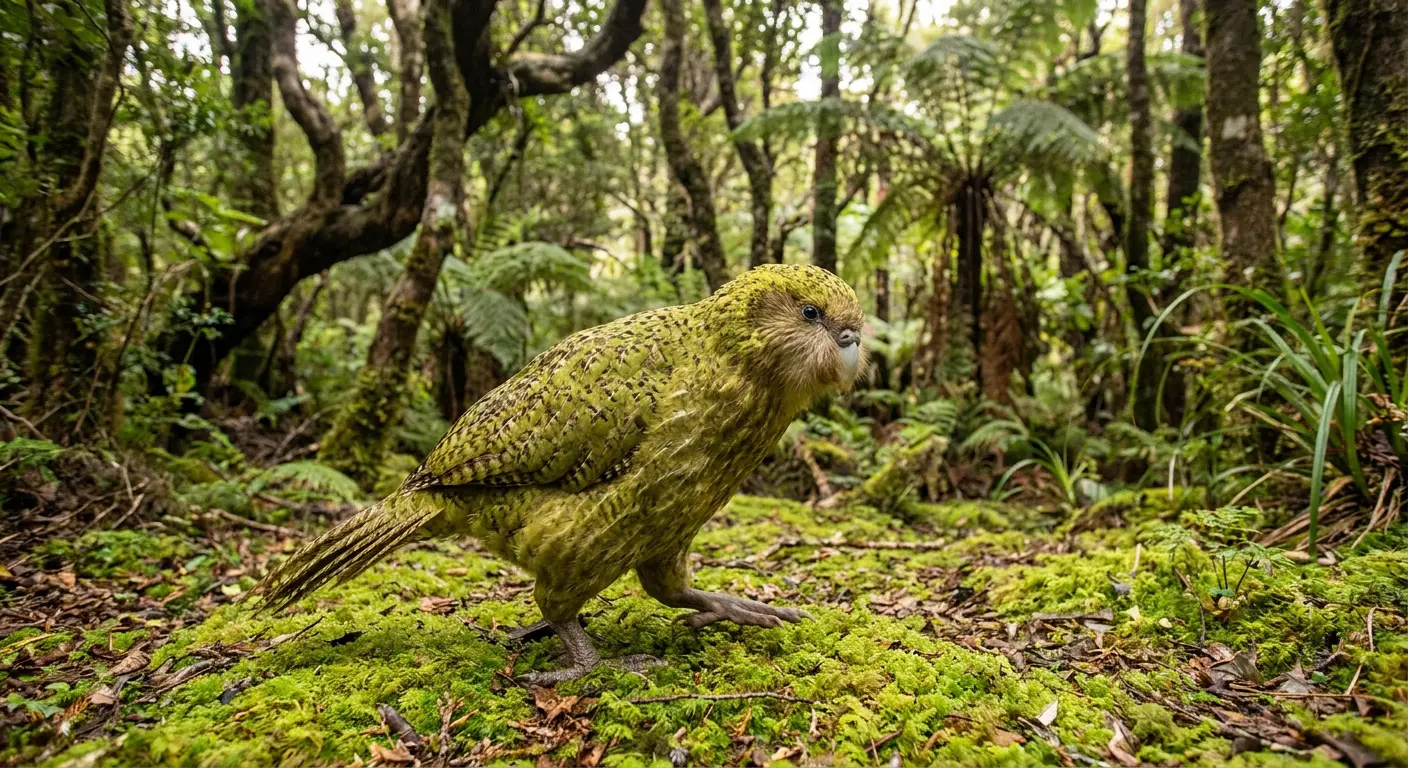
Yellow-green plumage covers each kakapo in fine blotches, while a broad grey beak and an owl-like face give the nocturnal parrot its unmistakable look. Males can weigh up to 9 pounds, yet these substantial birds cannot lift themselves into the air; they move through their habitat with a waddle instead.
That unusual body plan once suited New Zealand. Kakapo evolved without ground-level predators, and over time they lost the power of flight, a costly trait after people brought cats and rats into the country several hundred years ago.
The youngest chick in the 2026 cohort has crossed the 150-day threshold. That detail matters because the official population count includes chicks only once they are independent enough to reach that milestone, turning a productive breeding season into a documented population gain.
Vercoe, manager of kakapo recovery operations for New Zealand's Conservation Department, tempered the celebration with clarity. Recovery still has far to go, she said, even as a single season delivered a number of chicks that once required more than a decade and a half.
The new total also puts the breeding season into historical perspective. Conservationists believe the population may not have stood above 300 since roughly 75 years ago, when the species was sliding towards extinction.
From 51 Birds to 325
Only 51 kakapo remained when the Kakapo Recovery Programme began in 1995. Just 20 were female, leaving conservationists with a small breeding base and little room for losses.
Since then, the parrots have moved through 13 breeding seasons. Low genetic diversity has complicated that work, contributing to infertility and poor hatching rates even when the conditions for mating appear favourable.
The 2026 result does not erase those limits. A population of 325 remains small, and uncertainty sits inside every prediction about the next breeding season, from the timing of rimu fruit to the reproductive success of individual birds.
Still, the direction has changed. Kakapo are no longer represented by a few dozen survivors alone; 90 young parrots now carry more of the species' future into protected habitat.
Each bird in the programme wears a small radio transmitter like a backpack. Conservationists use those devices to locate individual parrots and follow their activity, an unusually close level of attention made possible, and necessary, by the population's size.
Such monitoring helps teams decide when a bird or nest needs direct support. The harder question now is when to step back.
Learning to Intervene Less
Remote nest data gave conservationists room to reduce some egg and chick checks during the 2026 season. Teams also cut back supplementary feeding in trials designed to identify which birds still need intensive management and which can breed with less human involvement.
Tane Davis, a representative of the kakapo recovery group, said progress cannot be measured by population numbers alone. His team increasingly wants kakapo breeding to produce more natural outcomes, with intervention reserved for the places where evidence shows it remains necessary.
That shift changes the meaning of a good year. Ninety chicks count as a clear gain, yet the deeper aim is a population that can reproduce safely without every egg demanding the same level of hands-on care.
A small number of the 2026 chicks will remain unnamed as a sign of that gradual change. Many others are expected to receive names on the first anniversary of their hatch days in 2027, continuing the programme's tradition of recognising individual birds.
The unnamed chicks carry a different kind of significance. Their anonymity points towards a future in which kakapo become numerous enough, and sufficiently self-sustaining, that every bird no longer needs to exist as a closely managed individual.
More Birds Need More Safe Ground
Small protected offshore islands now hold the surviving kakapo. These predator-free refuges shield birds that cannot escape cats or rats by flying, yet the record breeding season also sharpens a practical need: a growing population requires more secure habitat.
Finding or creating that space will shape the next phase of recovery. The source material does not identify new sites or a timetable for expanding them, leaving open the question of where future chicks will live if the population keeps climbing.
Food adds another variable. Kakapo feed largely on berries from native rimu trees, which fruit every two to four years and influence the timing of mating in a species already known for slow population growth.
Early modelling offers an encouraging possibility. After the latest four-year interval, the next breeding season may arrive in only two years, putting 2028 into view for Vercoe and the recovery team.
No model can promise another boom. Rimu cycles, fertility and hatching success still decide much of what happens next, while genetic limits continue to shadow a population descended from so few birds.
A Comeback More Than a Century in the Making
Kakapo once lived widely across New Zealand. Hunting, habitat loss and introduced predators drove their numbers down after human arrival, and by the middle of the 20th century the species had nearly disappeared.
Organised conservation efforts date to 1894, more than a century before the modern recovery programme began. The long timeline makes the 2026 cohort feel less like a sudden rescue than the latest, brightest result of persistence refined across generations.
Kakapo may live for 60 to 90 years, placing today's chicks inside a much longer story. Some could still be alive late in this century, carrying the genetic inheritance of a species that once stood at 51 known birds.
Celebration fits the moment. So does restraint. A record season has brought the kakapo population to 325, while protected habitat, reproductive limits and the timing of the next rimu crop will determine whether that rise becomes a sustained comeback.
For now, 90 young parrots are waddling into independence. The recovery team is already preparing for 2028, and New Zealand's heaviest parrot enters that wait with its largest recorded population and more room for evidence-led confidence than it has had in decades.
Source: NBC News. Read the original report on the kakapo baby boom.
Source: Read the original article