Rescued From Traffickers, Lulingu the Gorilla Is Now a Wild Mother
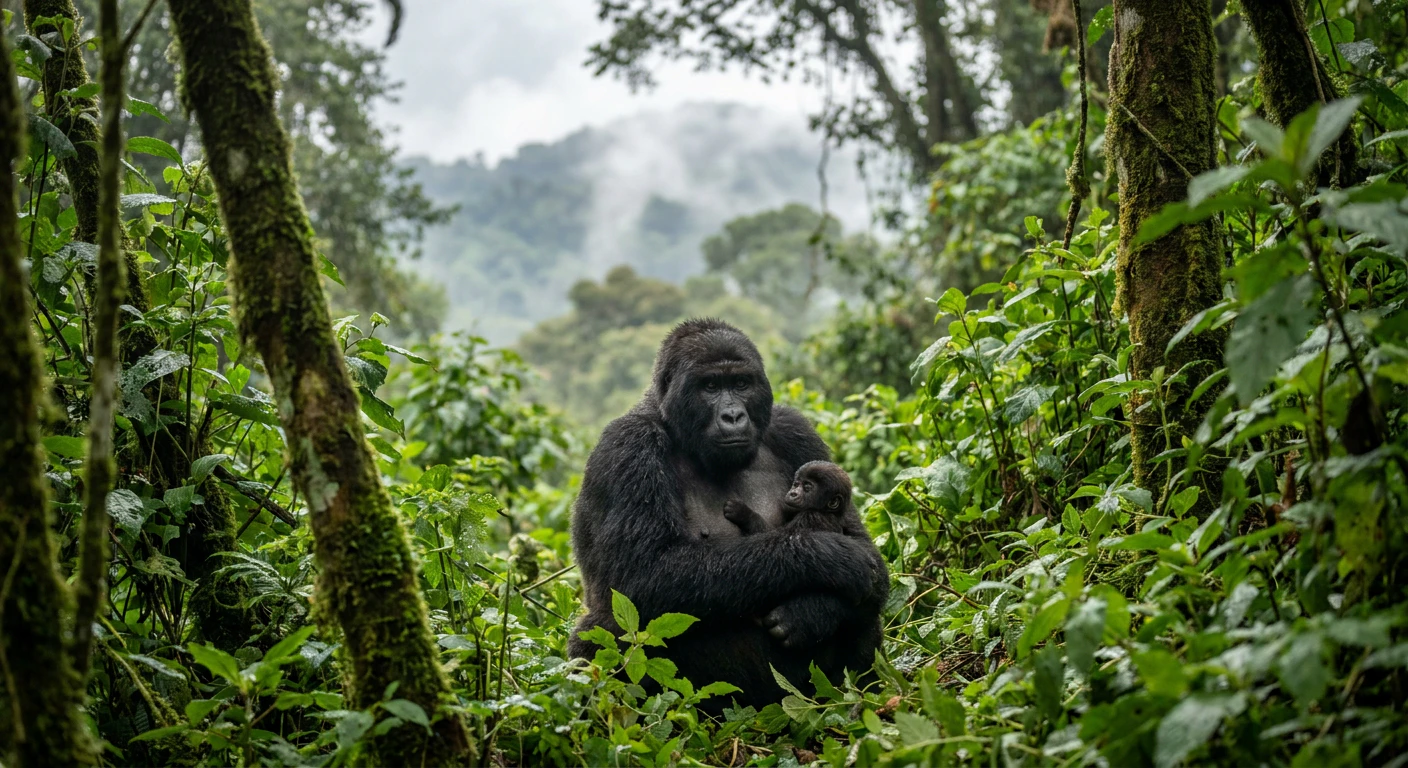
Lulingu, a Grauer’s gorilla, gave birth in May 2026, two years after she was released near Mount Tshiaberimu in Virunga National Park, eastern Democratic Republic of Congo. Conservationists say the birth shows she has adapted well to life in the wild.
“It really makes us happy,” Jackson Kabuyaya Mbeke, country director of the DRC Gorilla Rehabilitation and Conservation Education Center (GRACE), told Mongabay. He said mother and baby are both doing well.
From Rescue to Motherhood
The Congolese Wildlife Authority and Gorilla Doctors rescued Lulingu from an illegal wildlife trafficking network. She arrived at GRACE in 2016, about 18 months old. At the 16-hectare sanctuary she grew up in a setting close to her natural habitat, socialising and playing under the care of adoptive gorilla mothers.
In 2024, she was released near Mount Tshiaberimu, a remote part of Virunga.
Her baby has not been named yet. Local communities will suggest names and vote, and the winner will be revealed at a ceremony.
A Birth With Wider Meaning
Grauer’s gorillas, also called eastern lowland gorillas, live only in the tropical forests of eastern DRC. They are the largest gorillas on Earth. Their habitat is shrinking largely due to armed conflict, deforestation and mining.
Conservationists estimate the population fell by 77% between 1994 and 2015, from about 16,900 gorillas to 3,800. In 2016, after decades listed as endangered, Grauer’s gorillas were reclassified as critically endangered.
Kabuyaya Mbeke said preparations are under way to consider releasing more gorillas. However, the risks still remain high. Since early 2025, the armed group M23 has controlled large parts of Virunga, driving poaching, forest clearance and illegal trafficking.
For now, Lulingu is a wild mother.
SOURCE
Reintroduced Grauer’s gorilla gives birth in DRC national park, ‘makes us happy’ | Mongabay