
Seven Orangutans Rescued as Fires Spread Through Borneo’s Peatlands
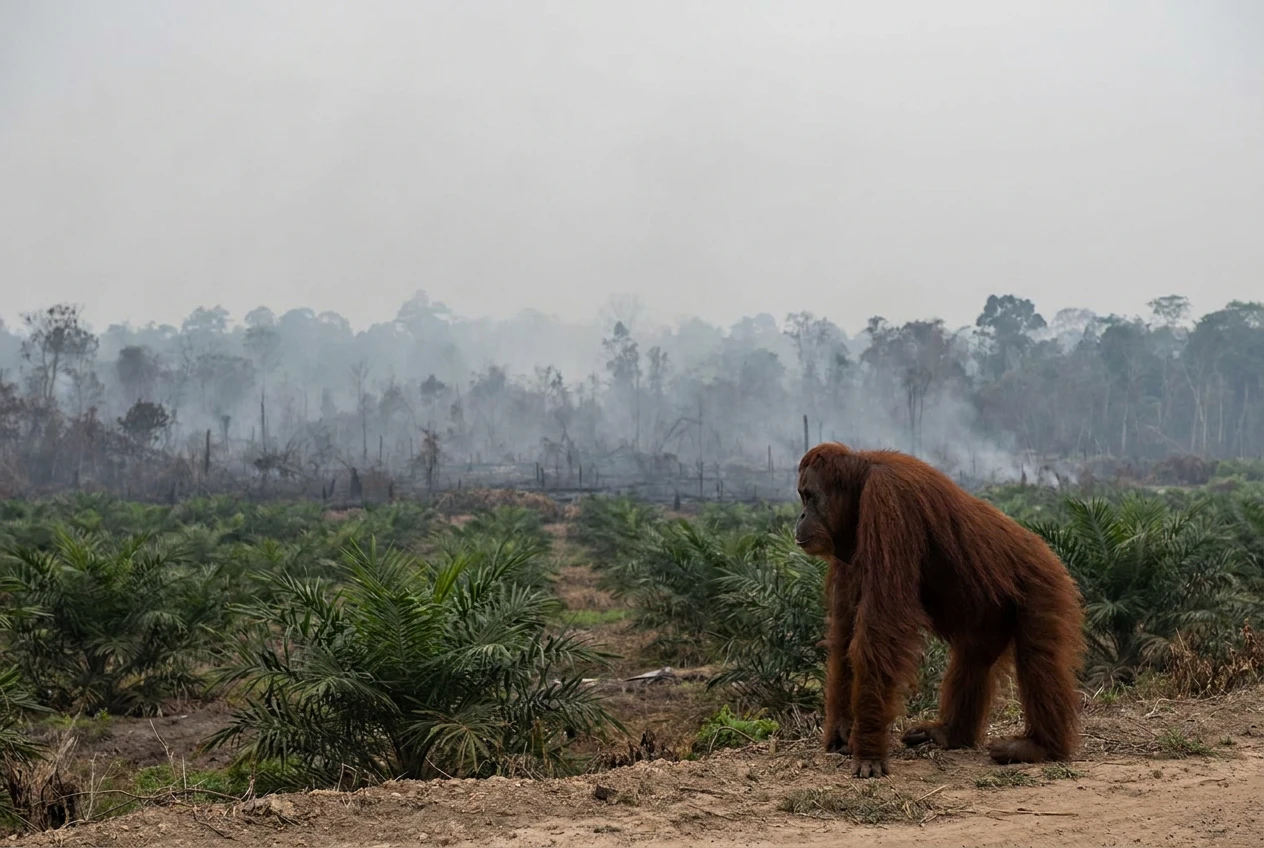
Seven critically endangered Bornean orangutans were rescued from wildfire-hit land in Ketapang, West Kalimantan, during August 2026. Most were found stranded in orchards and oil palm plantations. One did not survive.
Yayasan International Animal Rescue Indonesia (YIARI) and government conservation officials carried out the rescues of the orangutans (Pongo pygmaeus) as a strengthening El Niño raised the risk of major fires across Indonesia’s peatlands.
Orangutan Rescue Timeline
• 6 August: YIARI rescued Wak, a male who had wandered into a community orchard in Kuala Tolak village.
• 9 August: Fires had burned 28,680 hectares in West Kalimantan, according to Indonesia’s disaster agency, BNPB, more than half the total across the six worst-hit provinces. Ketapang had more fire hotspots than any other district in the province.
• 21 August: Mama Yuni and her two young, Pura and Yuni, were evacuated from a community orchard in Tanjungpura village after fire cut them off from their habitat.
• 27 August: Teams from YIARI, the provincial conservation agency BKSDA and Gunung Palung National Park rescued Mama Yayuk and her infant, Yayuk, from an oil palm plantation in Mayak village. The pair were released into Gunung Palung National Park where food is plentiful.
• 30 August: Residents of Laman Satong village found an adult male, later named Sampurna, weak near an oil palm plantation. He was taken to YIARI’s rehabilitation centre in Sungai Awan Kiri but died several hours later from symptoms linked to smoke exposure.
YIARI vet Komara said thick smoke lasting several days can cause orangutans breathing distress and oxygen deficiency. “The impact of forest and land fires on wildlife doesn’t always involve burns,” said Argitoe Ranting, YIARI’s operational lead.
Why Every Loss Matters
Bornean females usually have one baby every seven to eight years, resulting in slow population recovery. Between 1950–2025, the species is estimated to have declined by around 86%. The International Union for Conservation of Nature and Natural Resources (IUCN) says recurring peat fires cause sharp drops about once a decade.
Fire Risk Through October
Much of Ketapang is low-lying peatland. Drained for plantations and dried by drought, this carbon-rich soil burns easily. Indonesian meteorologists expect an intense fire season through October.
BKSDA head Murlan Dameria Pane said the agency follows up on every public report and ask residents to report orangutans in trouble rather than approach them.
Source
Rescuers scramble to save orangutans as El Niño-boosted fires spread across Borneo | Mongabay