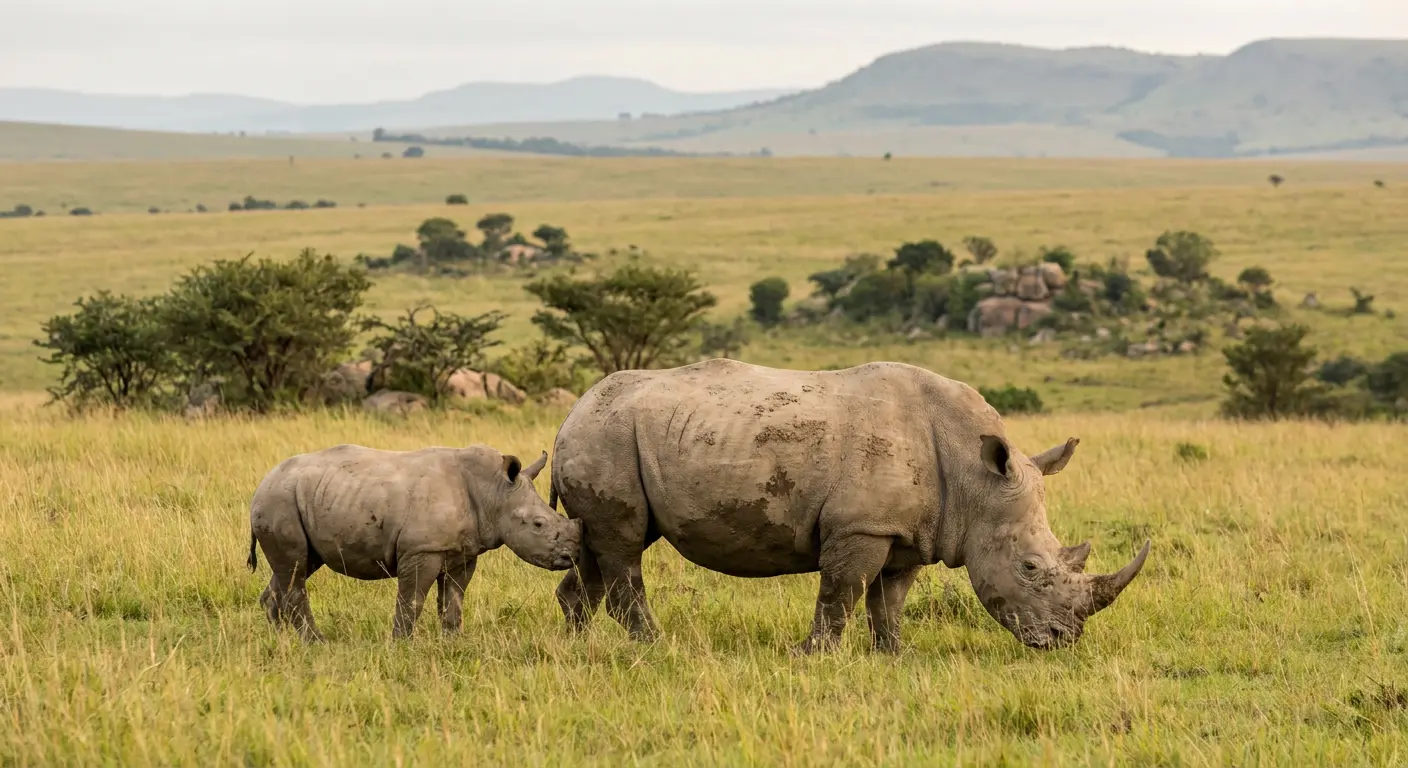
Dumisani Zwane, game capture manager at Ezemvelo KZN Wildlife in KwaZulu-Natal, has watched 6 orphaned white rhinos complete an extraordinary return: after four to five years of rehabilitation and release into protected areas, each has now given birth in the wild. Reported on 31 July 2026, the births matter because the females, rescued from around 2017 after poachers killed their mothers, are now adding calves to South Africa's wild population through years of daily care, gradual socialisation and biological monitoring.
The result carries a particular weight for Zwane. His goal was never simply to keep the young rhinos alive, but to prepare them to graze independently, bond with wild animals and raise calves of their own.
Care Built Around Release
A kicked bucket could mark the beginning. Zwane said newly rescued calves often arrived highly stressed, refusing milk and food, while carers worked patiently to help them feed.
Some bore injuries sustained while trying to defend their mothers, and one had lost part of an ear. Not every orphan survived, a reality that sits beside the progress of the 6 females now raising calves.
Milk remained part of their care for up to two years. The calves then shifted to grass and supplementary feed, formed social bonds with other orphaned rhinos and moved through increasingly large camps, including a 50-hectare enclosure that offered more natural conditions.
Familiar Company in the Wild
Release came only after the rhinos grazed without help and displayed natural behaviour. Zwane's team kept bonded animals together, giving individuals raised away from wild conditions the reassurance of familiar companions.
Staff also assessed habitat quality, predator numbers, elephant density and poaching risk before selecting protected release sites. The exact locations and security arrangements have not been disclosed, leaving necessary uncertainty around where the new mothers and calves now roam.
Once released, the females began associating with wild bulls and other rhinos. Ezemvelo followed them through biological monitoring rather than regular veterinary examinations, so the pregnancies, each lasting about 16 months, emerged as welcome surprises.
Many Hands Behind 6 Calves
"Many people fed these animals, cleaned after them and cared for them every day," Zwane told News24's report on the 6 births. Veterinarians, animal carers, donors and conservation organisations sustained work that had not originally been budgeted for.
Years passed between rescue and release. Then came a quieter measure of recovery: each female living as a wild white rhino, meeting others and eventually appearing with a calf.
The Work Continues
Thousands of rhinos have been lost to poaching in South Africa over the past two decades, according to Zwane, and security remains a priority. He declined to discuss how the mothers and newborn calves are protected.
For Zwane, the births complete the purpose behind every difficult feeding and careful move between camps. Six calves cannot erase what their mothers endured, yet they offer firm evidence that long rehabilitation can return orphaned white rhinos to the wild as breeding adults.
Source: Read the original article