Susan Lieberman, vice president of international policy at the Wildlife Conservation Society and one of the authors of a Nature commentary reported in October 2026, advances proposals with her fellow authors that target a gap that lets wildlife taken illegally from its native country enter legal markets abroad, including in Europe.
The response starts with making those original protections count across borders. For Lieberman, better enforcement must accompany changes in legislation: paperwork should not allow a wild animal's illegal origins to disappear.
209 Reptiles Reveal the Enforcement Challenge
209 reptiles were seized from breeding premises in Jerica and Sot de Ferrer, in Spain's Castellon province, the Civil Guard announced on 25 September 2026. They included critically endangered iguanas native only to Fiji; almost half the seized animals fell under the global wildlife trade treaty, CITES.
Investigators alleged that traffickers brought wild reptiles from the Americas, Africa and Asia, bred them without permits, then offered them at European fairs alongside legally obtained animals. Authorities arrested 3 people on charges including wildlife offences, smuggling and money laundering, and also confiscated unlicensed handguns and almost 200 rounds of ammunition.
The allegations expose the enforcement problem behind Lieberman's call for reform: an apparently legitimate breeding operation can conceal animals removed from the wild. Seizures interrupt individual operations, while her proposed legal changes address the markets that allow such animals to be sold.
Lieberman Wants Protection to Cross Borders
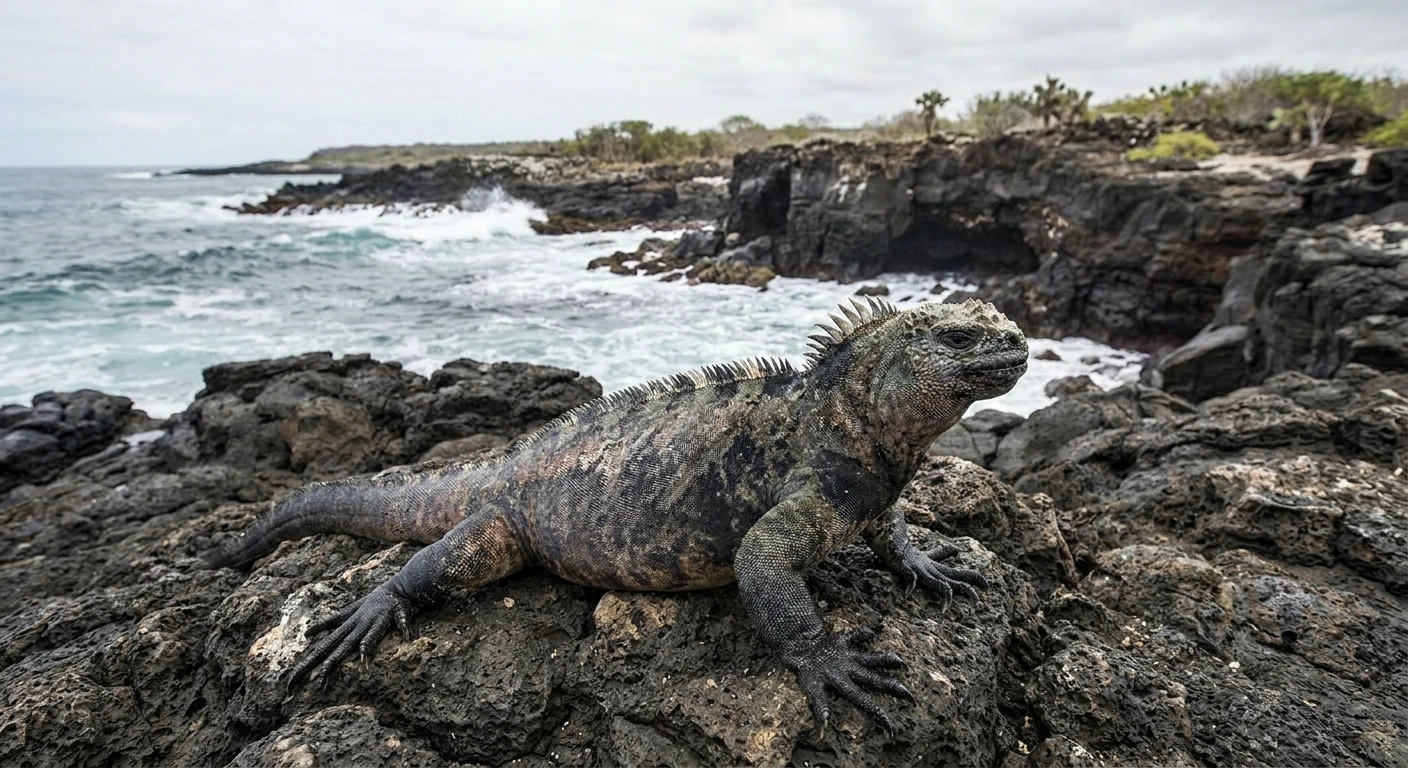
Galapagos marine iguanas (Amblyrhynchus cristatus) make the contradiction tangible. Ecuador has authorised no legal exports of these endemic reptiles, yet animals represented as captive-bred circulate legally in international commerce, principally from Europe and Africa.
In the European Union and many other jurisdictions, protection in an animal's home country does not automatically prevent its sale elsewhere. Lieberman wants national legislation to recognise those protections, rather than leave importing countries disconnected from the laws governing capture.
"Legislation that respects the laws of range countries should be a minimum," she said.
An EU feasibility study published in 2025 examined legislation addressing illegally sourced wildlife.
Missing Records Leave Animals Exposed
More than half the reptiles and 40% of amphibians in commerce come from the wild, according to research by Alice Hughes, who studies the trade at the University of Melbourne. Her figures put treaty coverage at just 9.5% of reptiles and 4.2% of amphibians.
Lieberman said every country needs a system like the U.S. LEMIS database to monitor all wildlife trade, not only species listed under CITES.
The uncertainty runs deeper than missing totals. Without reliable records of species, quantities and origins, researchers cannot judge whether trade is sustainable or consistently distinguish lawful transactions from trafficking.
Hughes proposes digitised invoices and genetic barcoding to check which species traders actually sell. Those measures would support the evidence Lieberman needs for stronger protections: securing a treaty listing requires demonstrating both commerce and the threat it poses.
Lieberman Sets Out the Next Steps
The black-and-orange harlequin mantella (Mantella cowanii) has nearly vanished from its native habitat in Madagascar, partly because collectors prize it. For animals already affected by habitat damage and disease, Lieberman's proposals seek to reduce an additional, preventable pressure.
A feasibility study looks at creating a permitted-species list for pets, screening animals for effects on wild populations, invasion risks and welfare needs. Such a system would shift regulation towards deciding what may be sold, rather than waiting for threatened species to gain protection individually.
Lieberman separates immediate action from longer negotiations: improve enforcement first, change trading rules next, and pursue international cooperation alongside changes in consumer behaviour. Her longer-term proposal would bring environmental offences into a dedicated international crime protocol, allowing participating governments to work together on enforcement and extradition.
Source
Legal gaps allow rampant pet trade, poaching reptiles and amphibians towards extinction | Mongabay