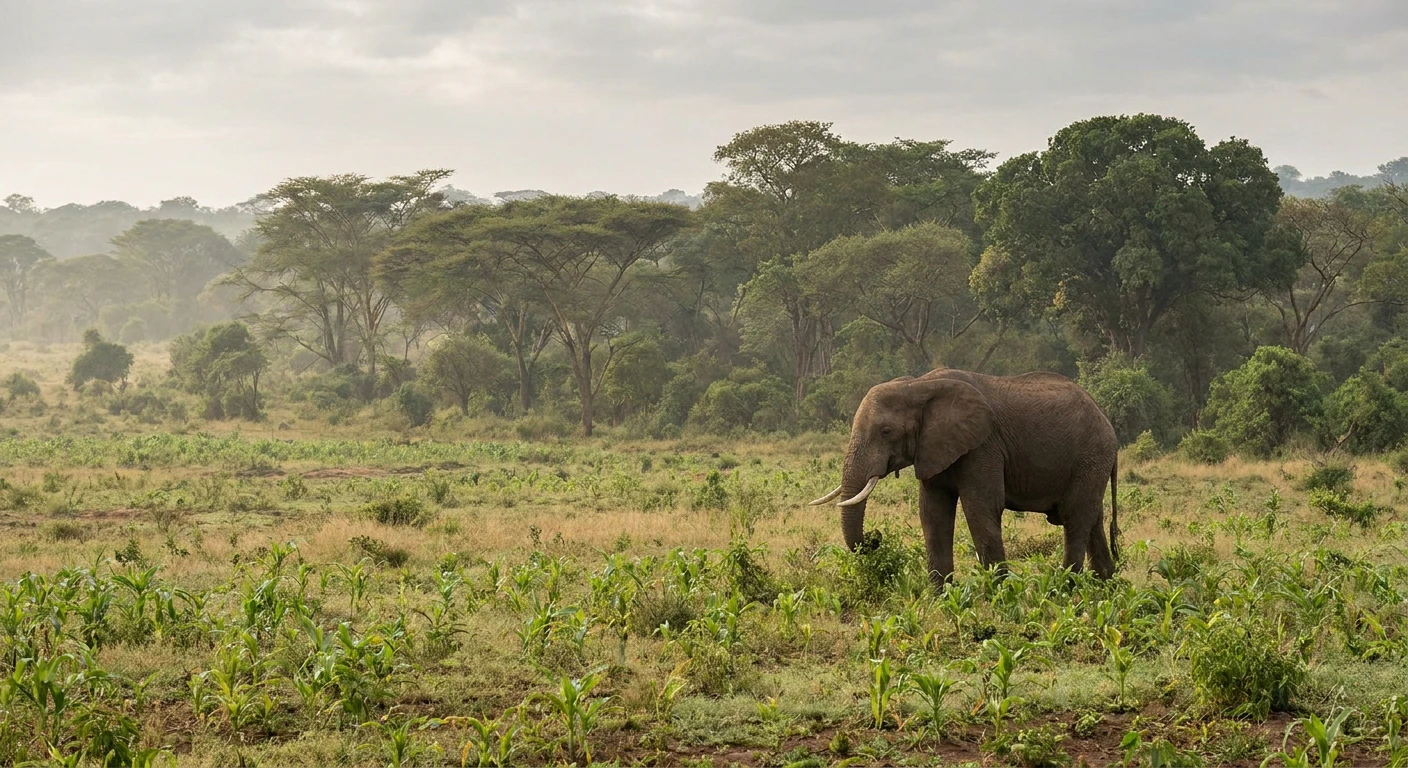
Sumatran elephants could gain access to more food and better-connected habitats through a new tree-planting initiative in Bukit Tigapuluh, Sumatra. The PROTECT30 programme, launched in February 2026, has already seen its partners plant 17 hectares of fruit trees to support elephant populations and forest-dependent communities.
Elim Sritaba, Chief Sustainability Officer of Indonesia-based APP Group, supports the initiative, which brings together businesses and conservation partners. The programme covers villages and forests across Jambi and Riau provinces, with its long-term success depending on continued cooperation between businesses, government agencies and local communities.
Fruit Trees Put Plans on the Ground
Jackfruit and cempedak are among the local trees planted in the 42-acre forage area. The consortium designed the planting to give elephants more food and support connections between their habitats.
Bukit Tigapuluh supports roughly 10% of the Sumatran elephant population, giving this small intervention a significant setting, with a planted forage area offering a concrete beginning.
Sritaba Puts Shared Decisions First
“Shared governance, agreed methods, and trust on the ground” are the foundations Sritaba identifies for the work ahead. Her company is working with a consortium comprising Proforest, WWF-Indonesia and KKI WARSI, not planting as a stand-alone corporate project.
The Natural Resources Conservation Agency, Jambi Provincial Forestry Service and Bukit Tigapuluh National Park Office are also involved. Together with other agencies, they are helping the consortium establish oversight arrangements and common working methods.
Taufiq Alimi, Executive Director of Proforest Southeast Asia, describes a programme that connects habitat conservation with community livelihoods. His stated aim complements Sritaba's emphasis on cooperation: conservation measures should respond to both ecological needs and the people who live there.
A Bigger Commitment Beyond the Forage Area
Roughly 400,000 hectares fall within PROTECT30's programme boundary. That figure includes forests and community villages, so it should not be read as an area of newly protected habitat.
For Sritaba and the partners, the human stakes extend beyond participation in a planting project. Bukit Tigapuluh's forests support livelihoods and cultural identities, alongside wild Sumatran tigers and orangutans at reintroduction sites.
PROTECT30 also plans to contribute to remediation under the Forest Stewardship Council Remedy Framework. That commitment places the early elephant work alongside APP Group's broader environmental and social responsibilities.
APP Group launched its Regenesis platform in September 2025, committing US$30 million annually and setting an initial target of 1 million hectares for conservation and restoration, covering a wider platform beyond PROTECT30. Sritaba's next challenge is to keep partners working together to turn these commitments into action.
Source