
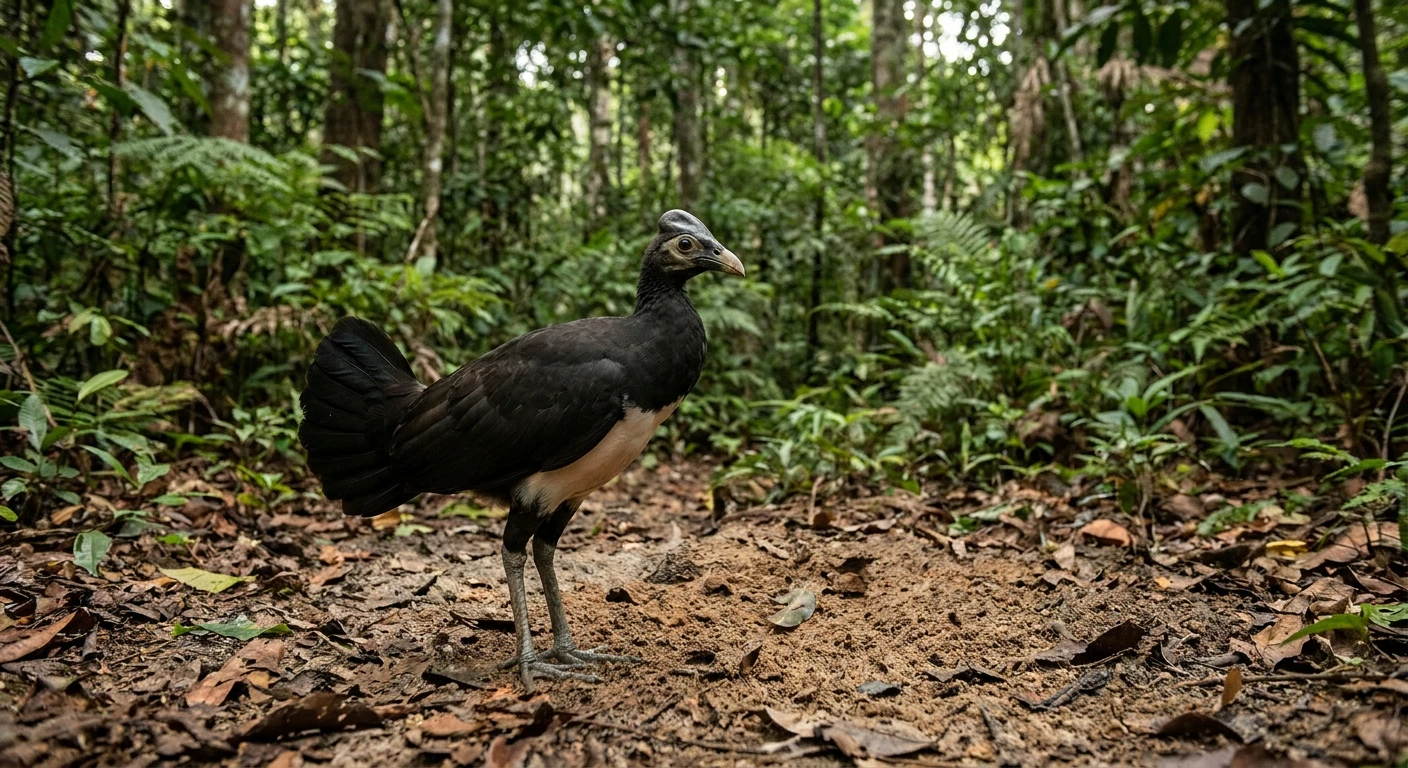
25 juvenile maleos (Macrocephalon maleo), critically endangered big-footed (megapode) birds from Sulawesi, Indonesia, were intercepted during 2024 on India-bound routes or after arrival, according to a study in the Journal of Asian Ornithology.
By September 2025, four birds recorded at a Thai government facility remained there, leaving their return to Indonesia unresolved. Marcy Summers, director and co-founder of Alliance for Tompotika Conservation, which protects maleos in Sulawesi, is calling for investigations into hatcheries that may have supplied traffickers.
Summers Questions Where the Chicks Came From
Summers wants Indonesian authorities to investigate possible corruption at incubation projects because she suspects birds intended for release entered the pet trade instead. The researchers also want stronger airport enforcement and arrangements to return confiscated maleos to Indonesia, with release where possible.
Outside protected areas, chicks are scarce, Summers explains. They emerge at night, often across extended periods, rather than appearing together in an easily collected group.
The similar ages of the seized chicks trouble Summers, who was not involved in the study, and considers a hatchery origin "highly likely". Her concerns call into question how effectively these areas can support conservation efforts, without establishing that any particular project supplied traffickers.
At Tambun and Muara Pusian in Bogani Nani Wartabone National Park, and Saluki in Lore Lindu National Park, workers transfer eggs into nearby hatcheries. Summers describes chicks being held before tourists pay to release them; other projects use industrially funded incubators away from nesting grounds.
25 Young Birds Expose the Trade
The other interceptions brought the documented total to 25 across three incidents.
• On 29 July 2024, 12 maleos packed into luggage were intercepted in Jakarta before travelling to Mumbai. Authorities arrested four Indian nationals, who received fines of 10,000 Indian rupees.
• On 18 June, officers in Mumbai confiscated five maleos from a traveller arriving from Jakarta.
• In December, officers at Cochin International Airport seized eight after a flight from Bangkok.
Uttara Mendiratta, an India-based wildlife trade researcher and consultant with the Wildlife Trust of India, co-authored the study. She says the available evidence points towards Indian pet buyers rather than onward shipments.
Mendiratta also describes couriers being recruited with paid holidays and cash. Traffickers exploit families travelling with children, she says, because they tend to pass screening more quickly.
Confiscation Leaves Birds Far From Home
Unfortunately, five maleos died within weeks of the Mumbai seizure, before officials attempted repatriation. The December birds went back to Thailand, their departure country, rather than Indonesia. Thai Department of National Parks, Wildlife and Plant Conservation facilities housed the eight birds.
A study co-author recorded four maleos at a government facility in 2024 and confirmed they remained there in September 2025; whether the confiscated birds will reach Indonesia remains uncertain.
Study co-author Chris Shepherd, senior conservation advocate at the Center for Biological Diversity, wants countries to establish a return process that allows suitable birds to rejoin wild populations.
Indonesian law prohibits catching, killing, selling or transporting maleos, and the global wildlife trade treaty bans international commercial trade. Thailand does not automatically protect foreign treaty-listed species unless they also appear on its national controlled list, which excludes maleos.
Summers Keeps the Nesting Grounds in View
Only 4,000-7,000 breeding pairs remain, and more than two-thirds of 149 nesting grounds have disappeared since 1983. Development, mining and roads have reduced breeding habitat, while people continue collecting eggs for food, which Summers identifies as the largest established threat
She warns that demand for live chicks could tempt people with access to hatcheries and encourage searches at unprotected nesting sites, and calls for closer investigation of the eggs and chicks handled by conservation workers.
Source