
Through duck banding, Montana’s Lesser Scaup Project supplies survival estimates for continental duck management and has identified water-management strategies that improve nesting success. Jeff Warren, a biologist at Red Rock Lakes National Wildlife Refuge, saw that large numbers also nested in Montana’s Centennial Valley, where he lived and worked.
Long-Term Research on Lesser Scaup in Montana’s Centennial Valley
“You have to start with where you are and what you know,” he said.
In 2004, Warren became the refuge’s wildlife biologist and began a long-term study of the ducks. In August 2026, the Lesser Scaup Project conducted its 22nd straight year of banding.
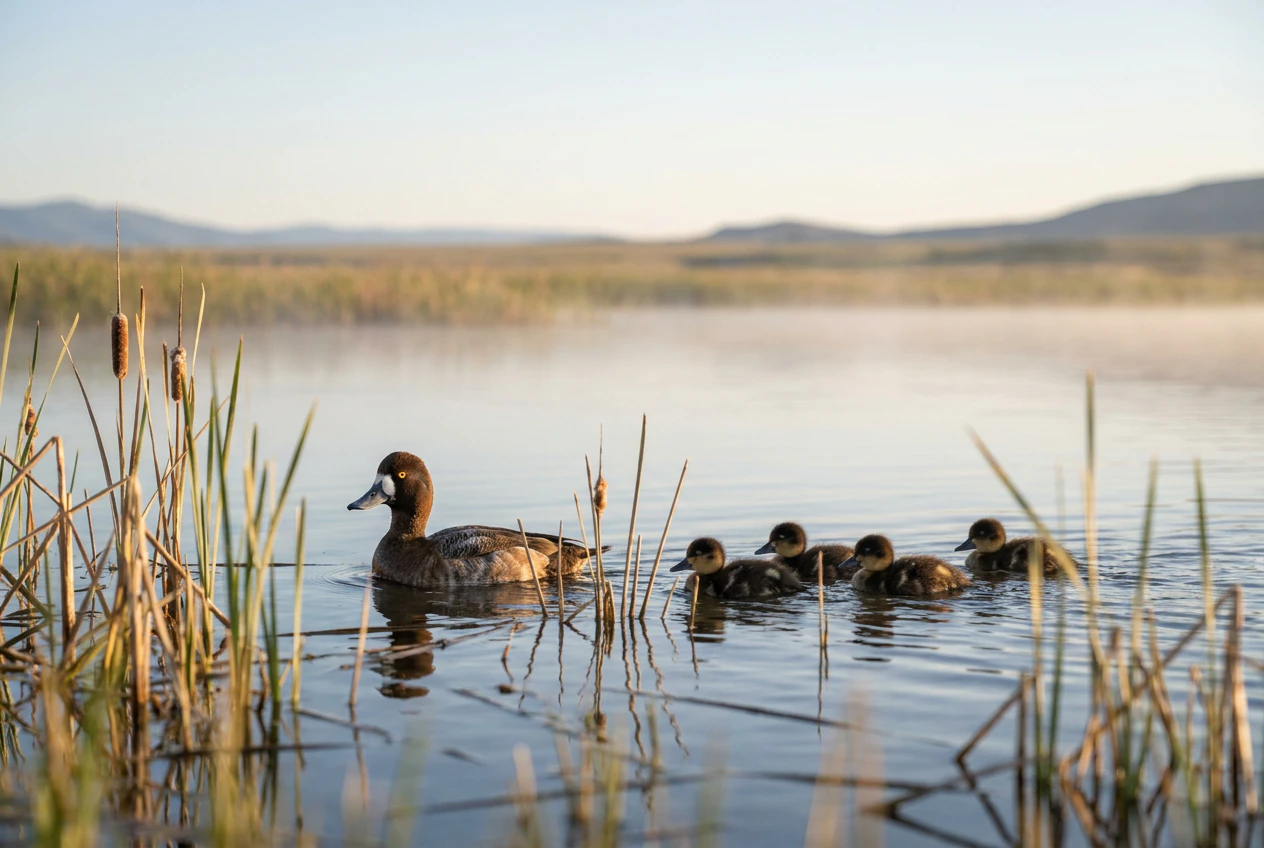
At dawn on Lower Red Rock Lake, a crew of 11 University of Montana researchers and Ducks Unlimited volunteers paddled canoes through the reeds. They herded females and ducklings into V-shaped nets, then took them ashore to be tagged, weighed and measured. In a good nesting year, the team bands 2,000 birds, half of all lesser scaup banded in North America before hunting season.
The result is one of the world’s longest-running and most detailed datasets on breeding ducks.
What the Ducks Revealed
Female scaup on Lower Red Rock Lake gain weight quickly, breed well and survive better than at other nesting sites. “Simply put,” said Warren, “it’s a great place to be a lesser scaup during the breeding season.” The study also found that raising water levels slowly through the breeding season helps more nests succeed.
The project’s survival estimates are used by the U.S. Fish and Wildlife Service to guide how scaup are managed across the continent.
As the ducks stop at so many sites as they migrate, they show the health of ecosystems far beyond Montana.
“These birds tie the continent together,” Warren said.
Still Below Target
Scaup numbers remain 15% below the long-term average and well short of the 4.9 million target in the North American Waterfowl Plan.
Source
Duck banding in the Centennial Valley helps save the lesser scaup - High Country News