
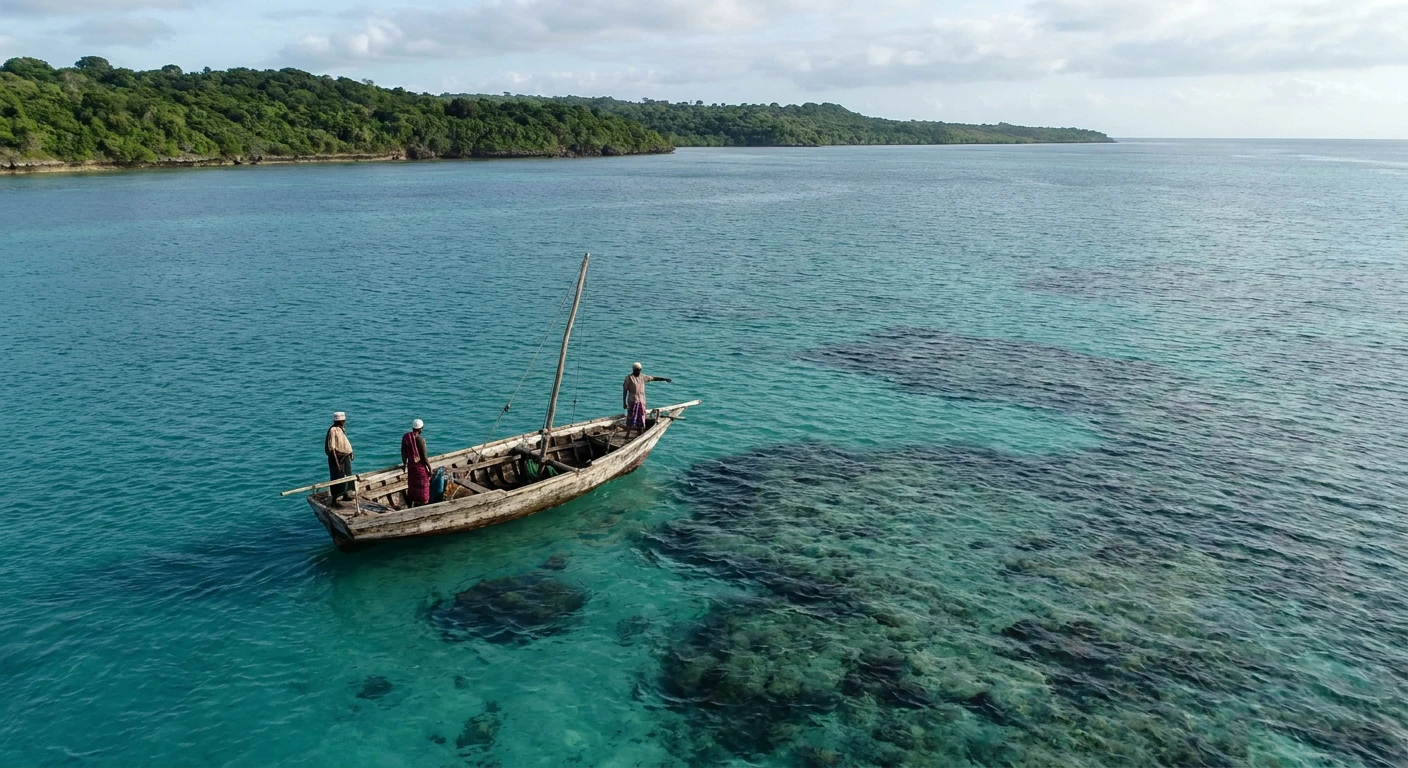
Local fishers are helping shape marine protection around Pemba Island, Tanzania, using their knowledge of fish spawning sites to guide fishing restrictions and support recovery from overfishing. Established in 2026, two marine conservation areas aim to protect these important habitats and the marine life that depends on them, including reef manta rays and yellowfin tuna.
Together, the North-East and South-East conservation areas cover 1,300 square kilometres. More than 20 local communities helped design their boundaries and management plans, working alongside Tanzania's fisheries department, the Wildlife Conservation Society, Blue Alliance and Mwambao.
Local Knowledge Shapes the Rules
Villagers can identify key spawning areas for protection through no-fishing zones, while also working with conservation organisations to assess ecosystem conditions and creating a baseline for measuring future changes.
Small-mesh kokoro nets catch young fish and damage coral, making gear restrictions part of the response. Fisheries committee members patrol alongside conservation staff, enforcing fishing exclusions and seasonal closures, often timed around spawning.
Omar Hamad Salim, an elected fisheries committee member in Tumbe, also handles complaints, fishing licence applications and enforcement through village rules. Women now hold around 30% of committee positions, with the Blue Alliance also involving women and young people in patrols and fisheries management.
Early Progress, Not Yet Recovery
Patrols have risen by over 50%, while illegal activity has fallen by about 45%, reports Blue Alliance's Abdulrahman Ali Abdalla. Though these are encouraging enforcement figures, they do not yet demonstrate ecosystem recovery.
Makame Omar Makame, who heads Tanzania's fisheries department, says ecological evidence needs more time and requires testing on whether protection changes conditions underwater.
Fishing remains permitted under regulation, but closures put pressure on household incomes. Blue Alliance connects fishers with processor Samaki Bluu for premium-price sales and is exploring sea cucumber farming and seaweed drying as additional income sources.
The real test is whether community-led management can help marine life recover while protecting the livelihoods of local fishers.
Source
Pemba's new marine protected areas show the power of collaboration to meet 30x30 goal | Mongabay