
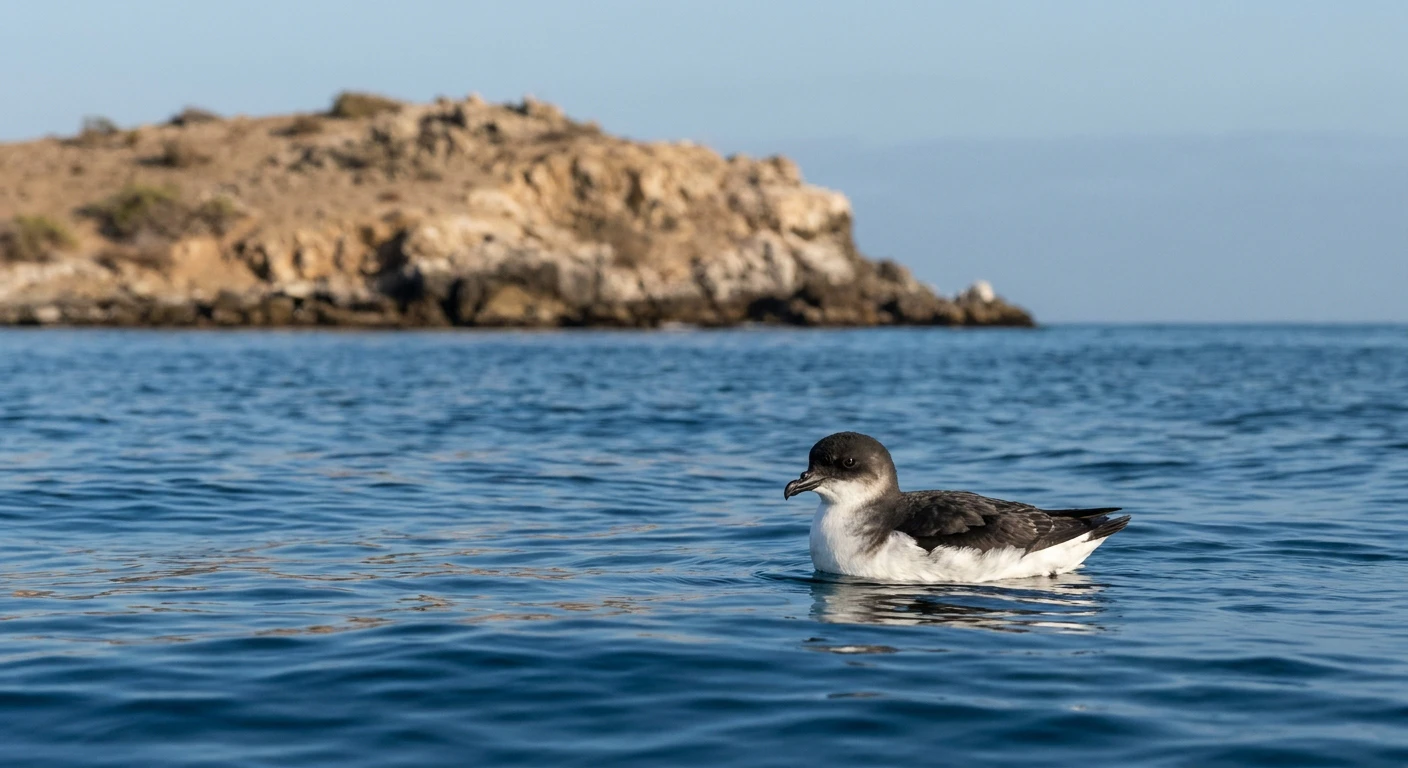
The number of breeding pairs of Peruvian diving petrels on Chile's Choros Island rose from around 12,000 in 2013 to nearly 90,000 in 2024, according to research published in Marine Ornithology. Researchers from Universidad Católica del Norte found that population growth more than doubled after invasive rabbits were removed from the island in 2013, helping restore important nesting habitat.
The removal was led by Maria Jose Vilches of Island Conservation and built on years of protection for the seabird colony.
More Room for Burrows
Burrows give these petrels somewhere to breed, but rabbits damaged them while stripping the island's vegetation. Removing the rabbits allowed nesting conditions to improve, explains Vilches, Island Conservation's conservation impact manager.
From 3.2 hectares in 2010, the birds' nesting area grew to over 10 hectares by 2024; this increase also reflects improvements to the birds' breeding habitat.
Choros carries unusual weight in the species' future: earlier research put roughly 95% of Chile's breeding population there. Protecting this colony, within Humboldt Penguin National Reserve, reaches well beyond a single island.
Protection Came Before Acceleration
The researchers estimate that petrel numbers on Choros have increased approximately 300-fold since 1980. Vilches attributes that longer recovery to decades of conservation, including measures that limited disturbance and protected breeding sites.
Rabbit removal appears to have accelerated an existing recovery, with findings highlighting the importance of continued protection and habitat restoration in supporting the birds' return.
The recovery also helped the species move from Endangered to Near Threatened in 2020. That change preceded the 2024 count, placing the latest measured gains within a longer improvement.
Calls Encourage a Return
Artificial burrows and recordings of petrel calls offer another approach on nearby Chanaral Island. Island Conservation has used them to encourage birds to occupy restored breeding areas, extending the work beyond Choros.
The petrel recovery offers a practical direction for further work: protect breeding grounds, repair damaged habitat and help birds return.
Source