
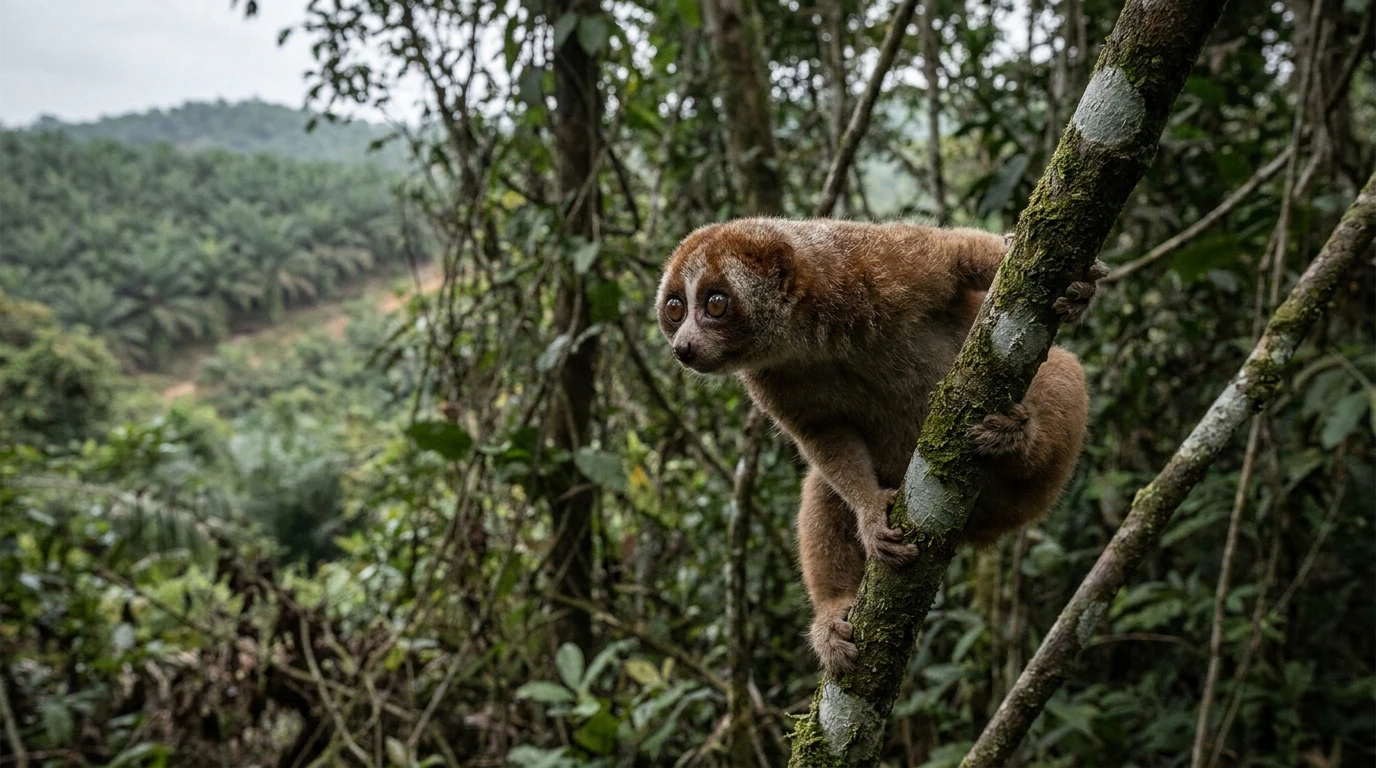
More than 90 slow lorises were recorded by Alobi Wildlife Rescue Center on Indonesia's Bangka Island between 2015 and 2025, with 86 eventually released into suitable habitat. The records provide evidence of successful rehabilitation and survival at several locations across the island.
Study co-author Timon Glaw, a conservation graduate student at Vienna's Haus des Meeres Aqua Terra Zoo, said the findings offer valuable insight into the outcomes of rescue and release efforts.
What Rescue Records Reveal
Houses, gardens, roads and plantations were among the places rescuers encountered the animals. Electrical wires caused some severe injuries, and treatment could not save every loris.
As the name implies, slow lorises are small, nocturnal primates with reddish-brown fur, distinctive facial markings and large eyes. They move cautiously through trees and have a venomous bite that can cause dangerous allergic reactions in humans.
These rescue records offer valuable insight into where the animals persist, but Glaw called for organised field surveys to establish their distribution and population sizes. He also highlighted the need to protect forests threatened by tin extraction and oil-palm cultivation.
Protecting Bangka's Remaining Forest
Historical records examined by the researchers covered 1930-1932, followed by decades without dependable scientific evidence of survival. The International Union for Conservation of Nature assessed the species in 2020 as critically endangered, with possible extinction; the new study findings appear in the journal Spixiana.
Rediscovery confirms that the loris has survived, but its future remains at risk. Glaw says the next priorities are to protect Bangka's remaining forests and conduct surveys to better understand the species' population and distribution.
Source
Feared extinct, Bangka slow loris primate rediscovered in Indonesia | Reuters