
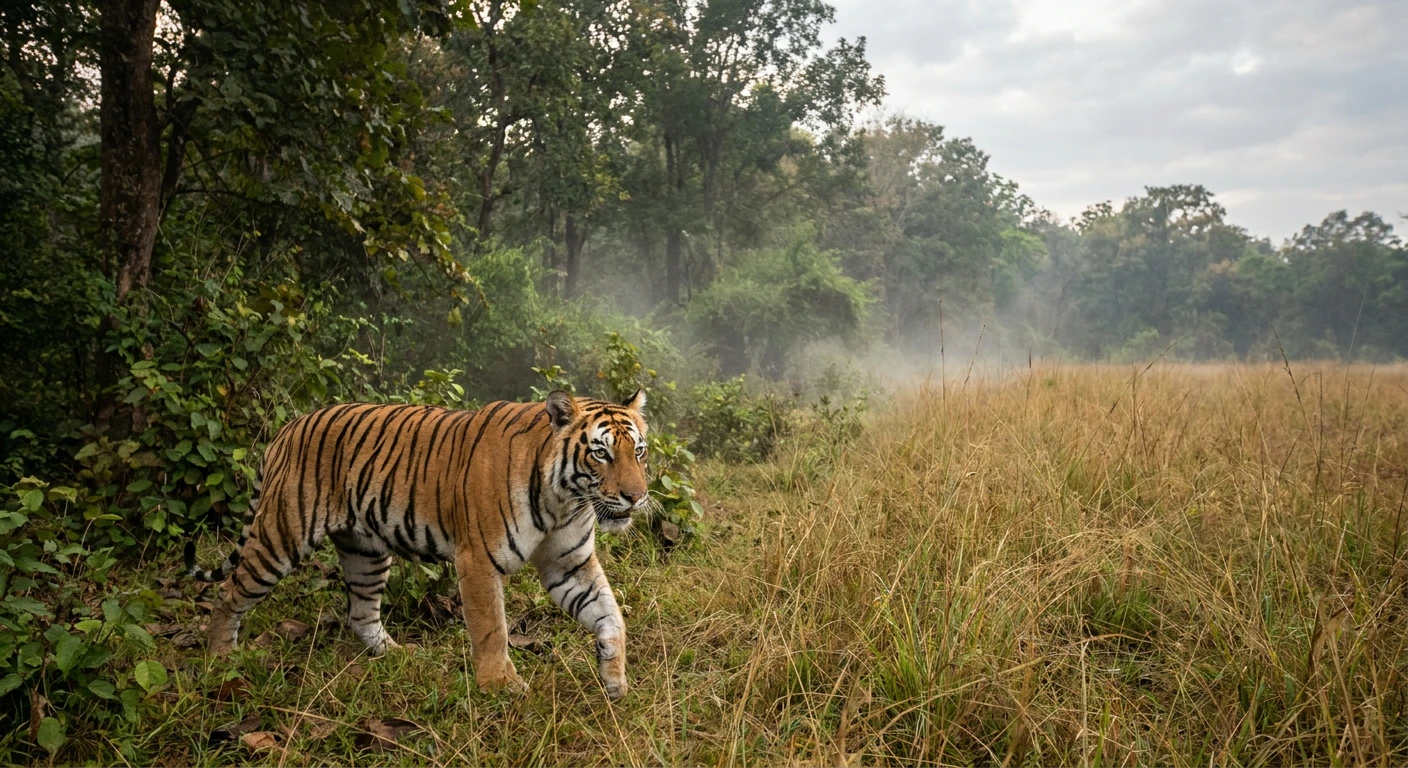
Susan Lieberman, Vice President of the Wildlife Conservation Society, is urging governments to strengthen controls on commercial captive-tiger breeding to protect progress in wild tiger recovery. Her call comes ahead of a wildlife-trade meeting in November, as wild tiger numbers show signs of recovery.
Lieberman Wants Evidence, Not Another Promise
The Global Tiger Forum estimated the global population at 5,711 in July 2025, giving governments renewed progress to protect against threats linked to the commercial trade in captive tigers.
Documents prepared for a wildlife-trade meeting in Geneva, Switzerland, from 2–6 November 2026, reveal that only six countries reported on measures to address risks linked to the captive-tiger trade.
China, Mexico and Slovakia submitted reports, alongside Thailand, the United States of America and Viet Nam. However, none supplied enough detail to establish whether captive tiger numbers were limited to what conservation requires, including adequate counts of facilities and the animals they hold.
For Lieberman, the obligation already exists. In 2007, governments agreed under the Convention on International Trade in Endangered Species of Wild Fauna and Flora (CITES) to prohibit breeding tigers for commercial use of their body parts and limit captive populations to conservation needs.
Lieberman stresses that an agreement is only meaningful if governments put it into practice. "The focus must be on action and conservation of tigers in the wild."
Recovery Gives the Demand Its Weight
Around 3,200 tigers remained in the wild in 2010, compared with an estimated 5,711 in 2025, a recovery supported by Indigenous Peoples, local communities and rangers working alongside governments and conservation partners. Despite this recovery, tigers remain endangered, with poaching and habitat loss continuing to threaten wild populations.
Heather Sohl, Tiger Trade Lead at the World Wide Fund for Nature (WWF), identifies the connection between captive facilities and animals outside them: facilities participating in illegal trade can stimulate demand, which in turn encourages poaching. In response, she advocates for stronger supervision and transparent records.
Additionally, the organisations define a tiger farm by its links to commercial trade, rather than simply keeping captive tigers—this includes facilities that intend, or are likely, to supply animals or their parts and derivatives.
Count the Tigers and Track Their Transfers
The organisations are calling for birth registers, death records and transfer histories, alongside counts of facilities and captive animals—records which would help authorities spot inconsistencies and assess exposure to trade.
Lieberman's call for action is backed by tools experts have already developed. Guidance covers inspections and conservation breeding, while advice on handling dead specimens and the TigerBase DNA profiling system can support enforcement as governments phase out problematic facilities.
Responsible captive breeding offers a useful comparison, but is not a practice exempt from scrutiny. The organisations highlight conservation programmes overseen by recognised zoo associations as examples of animal welfare, genetic management and traceability standards that can work.
Governments also agreed in 2025 to independent assessments of progress on captive facilities and wider tiger-trafficking risks. The organisations are seeking funding to make those assessments happen, turning Lieberman's demand into a concrete next step: evidence that countries are carrying out the commitments they made.
Source
Trade from Tiger Farms Threatens Wild Tiger Recovery | Wildlife Justice Commission