
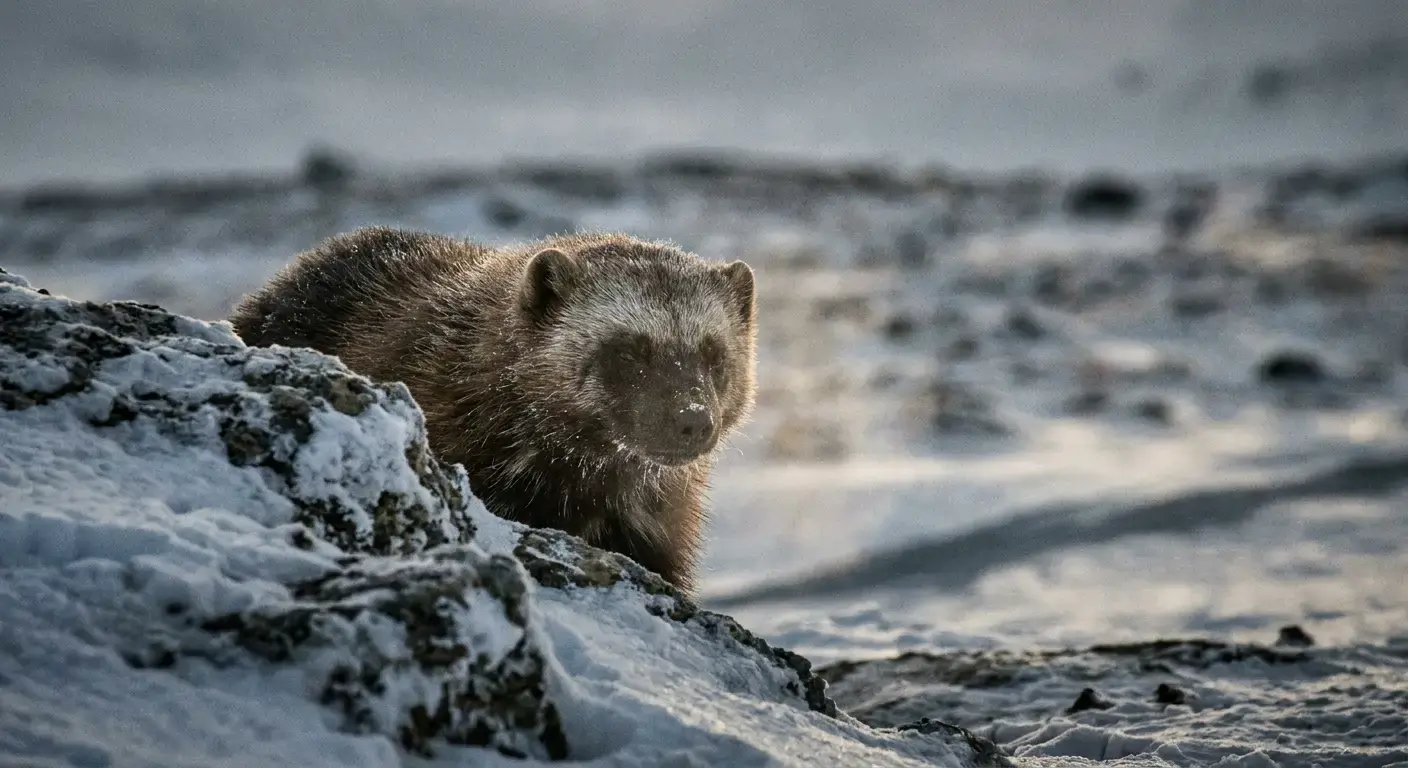
Sweden’s "payment for life" program for wolverines is failing as stagnant funding and climate change drive the predators from their northern strongholds. Established in 1996, the Conservation Performance Payment (CPP) scheme pays Sámi reindeer herders to share the tundra with these predators. A 2026 study from the University of York reveals the model is now faltering.
Shifting Strongholds
Dr. Hanna Pettersson and her team at the University of York analysed 30 years of data. They found that while wolverines are expanding south, they are disappearing from the rugged northern strongholds where they were once most abundant. The logic behind the CPP was simple.
Instead of paying for dead livestock, the Swedish government rewarded the presence of life. Communities received 200,000 SEK for every documented wolverine reproduction on their grazing lands. This shifted the focus to coexistence, turning the birth of a kit into a financial asset.
By 2015, the program was drawing international attention for boosting wolverine numbers. Today, that progress is unravelling because the financial math no longer adds up for the people living alongside the animals.
The Half Life of Conservation Funding
The payment of 200,000 SEK per reproduction has not moved since 2002. Over two decades of rising costs and inflation have effectively halved the real value of these payments. While the Sámi Parliament calculates that a fair payout should stand at 480,000 SEK today, the Swedish government offered a mere 25,000 SEK increase in 2024.
This gap creates a profound economic strain on Sámi communities. They are essentially expected to subsidise a national conservation goal out of their own pockets.
Norrbotten county provides the clearest evidence of this failure. In the early 2000s, this Arctic region accounted for two-thirds of all documented wolverine reproductions in Sweden. Modern counts show that Norrbotten now represents less than one-third of the total.
As the financial incentive to protect the wolverine erodes, so does the resilience of the communities required to host them.
Trust is a quiet casualty. When the state asks a marginalised group to carry the burden of a predator population but refuses to adjust for the cost, the partnership breaks. Sámi herders are also navigating a landscape increasingly crowded by mining and industrial forestry.
These pressures make the stagnation of payments feel like an abandonment of the co-management ideal.
Invisible Tracks in a Changing Climate
Climate change is adding technical complexity. Official population counts rely on finding prints and dens in the snow. Arctic snow conditions are shifting rapidly.
Warmer winters make it harder to detect tracks, meaning official numbers likely undercount animals. For a herder, an undetected wolverine is a double loss: the animal remains a threat, but it generates zero income through the payment scheme.
Wolverines are moving. Driven by changing conditions, the species is spreading into southern Sweden. This masks the decline in the north, creating a false sense of security for policymakers.
If the population in the ancestral northern range continues to thin out, long-term genetic health remains at risk. The southern pioneers are colonising new territory, but they are doing so while the traditional habitat of the Swedish wolverine grows quiet.
The True Price of Coexistence
Coexistence requires active maintenance. The study suggests governments risk undermining gains when they fail to adapt to the rising costs of living with wild animals. When the burden of national biodiversity is shifted onto marginalised communities already strained by economic change, friction eventually ignites.
It is an expensive lesson in the fragility of "hope with teeth" when financial support is pulled away.
Evidence suggests the CPP model can work, but only if it remains grounded in reality. The Swedish government held onto a 2002 pricing structure while costs climbed for decades. This disconnect leaves Sámi herders to navigate a landscape of increasing predators and decreasing support.
Without a significant correction in payouts, the program that once saved the wolverine may ensure its decline in the north. The future of the species rests on whether the state is willing to pay the actual price of the wild.
Source
Why Sweden's wolverine conservation success story is unraveling | ScienceDaily, University of York