
Cold-water corals and ancient sponge fields across Europe face a relentless industrial threat from weighted nets that scour the ocean floor. A study published in May 2026 reveals that commercial fishing fleets spend more time bottom trawling inside European marine protected areas than in unprotected waters.
This paradox turns seafloor conservation into a map-based illusion, failing the ecosystems these zones were designed to shield. While intended to give the seabed a chance to breathe, they have become centres of high-intensity industrial activity that release centuries' worth of stored carbon.
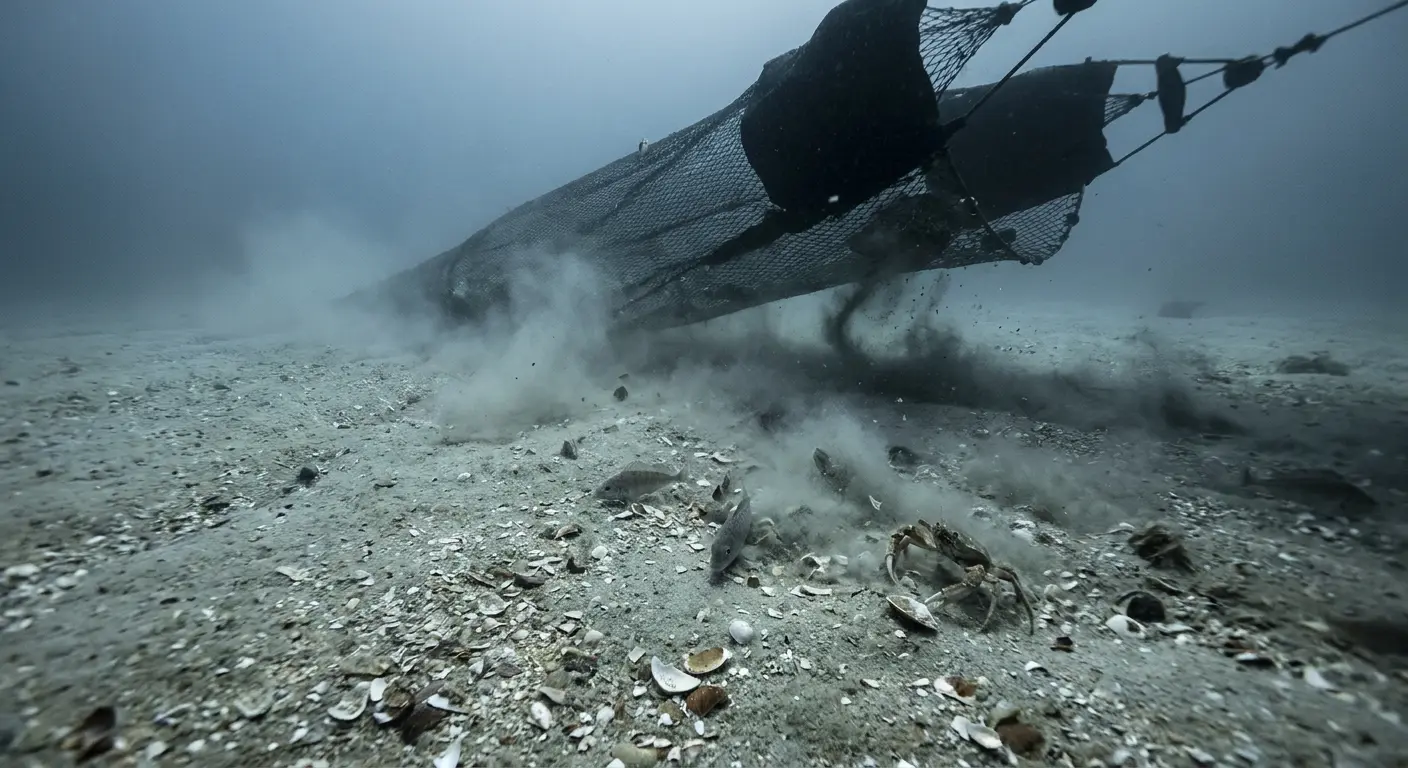
By dragging heavy gear across the silt, vessels flatten the living architecture of the deep, transforming habitats into desolate plains.
The Hidden Architecture of the Seabed
Worms, molluscs, and crustaceans weave together a complex sediment community that serves as the foundation for life in the deep. Organic matter is buried in these sediments, locked away from the atmosphere for as long as the ground remains undisturbed.
Centuries of continuous trawling have fundamentally altered the physical and biological makeup of the European seafloor. Weighted nets act like aquatic bulldozers, displacing animals and crushing structures built by corals and sponges.
By churning up the silt, trawling releases organic matter back into the water column. The social cost of these carbon emissions ranges from €4.87 billion to €18 billion annually. Compared to €180 million in yearly fishing profits, the climate cost is up to 90 times the value of the catch.
The Reality of Paper Parks
Conservationists use the term "paper park" to describe an area that looks protected in policy documents but remains open to exploitation. Most European marine protected areas fit this description.
Data show that fishing efforts are often concentrated within these zones because they historically hosted the most productive habitats. Roughly 3,000 distinct marine species end up in bottom trawls, including 237 species classified as threatened or endangered.
European governments provide over €1 billion in annual subsidies to an industry that generates a net societal loss of up to €16 billion every year. Without this government support, the industrial fleet would struggle to maintain its current scale.
Shifting the Policy Tide
Scientists suggest that halving bottom trawling efforts across the continent would maximise net benefits to society, balancing food provision with massive climate costs. In one Scottish protected zone where trawling was banned, seabed life tripled in a short period.
Recovering the lost complexity of the seafloor requires more than just lines on a map. It requires the physical removal of the nets.
Sources
European bottom trawling costs billions every year in climate impacts, study finds | Mongabay